
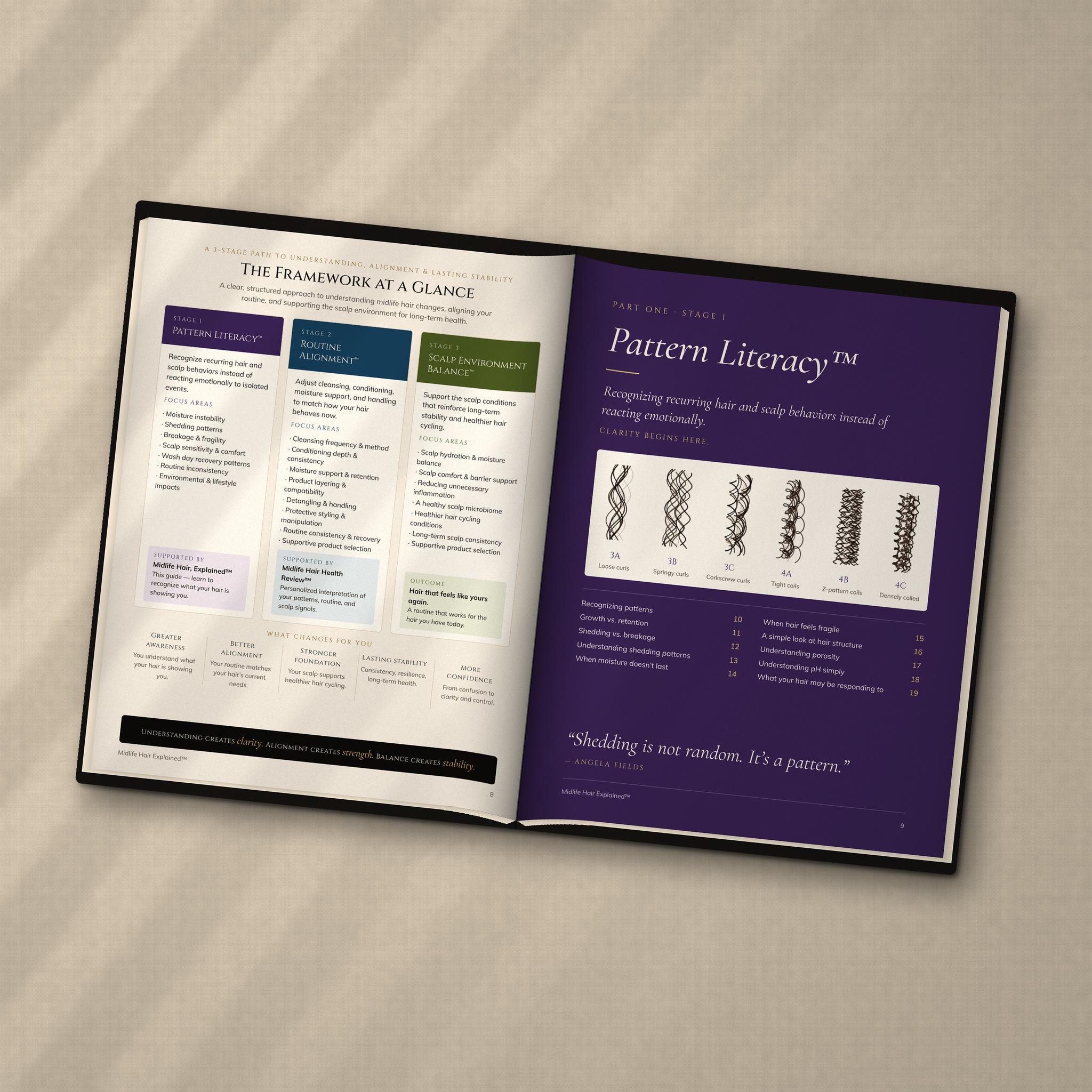
What’s inside
The book is organized into the three stages of the Midlife Hair Stability Framework™, each color-coded so you always know where you are.
Part 1 — Pattern Literacy™
-
shedding vs. breakage
-
growth vs. length retention
-
moisture instability and fragility
-
hair structure: the cuticle, cortex, and medulla
-
porosity and pH, explained simply
-
curl patterns, from 3A to 4C
Part 2 — Routine Alignment™
-
why routines stop working — and how to stop overcorrecting
-
what each product in your routine actually does
-
ingredient awareness, including fragrance
-
gentle cleansing and detangling
-
protecting moisture overnight and protecting fragile ends
-
balancing protein and moisture
Part 3 — Scalp Environment Balance™
-
understanding your scalp environment
-
stress and hormonal influence during perimenopause and menopause
-
food, nutrition, and supplements
-
when to see a dermatologist, and when to start with a Midlife Hair Health Review™
This is not trend-based hair advice.
It’s structured understanding.
Who this Book is for
This book may be helpful if:
-
your routine suddenly feels inconsistent
-
moisture no longer lasts like it used to
-
breakage feels new or harder to manage
-
shedding patterns have changed
-
your scalp feels more reactive
-
you feel like you’re trying harder but understanding less
-
you want clarity before changing everything again
This guide was created for women who want structure instead of constant experimentation.
The Midlife Hair Stability Framework™
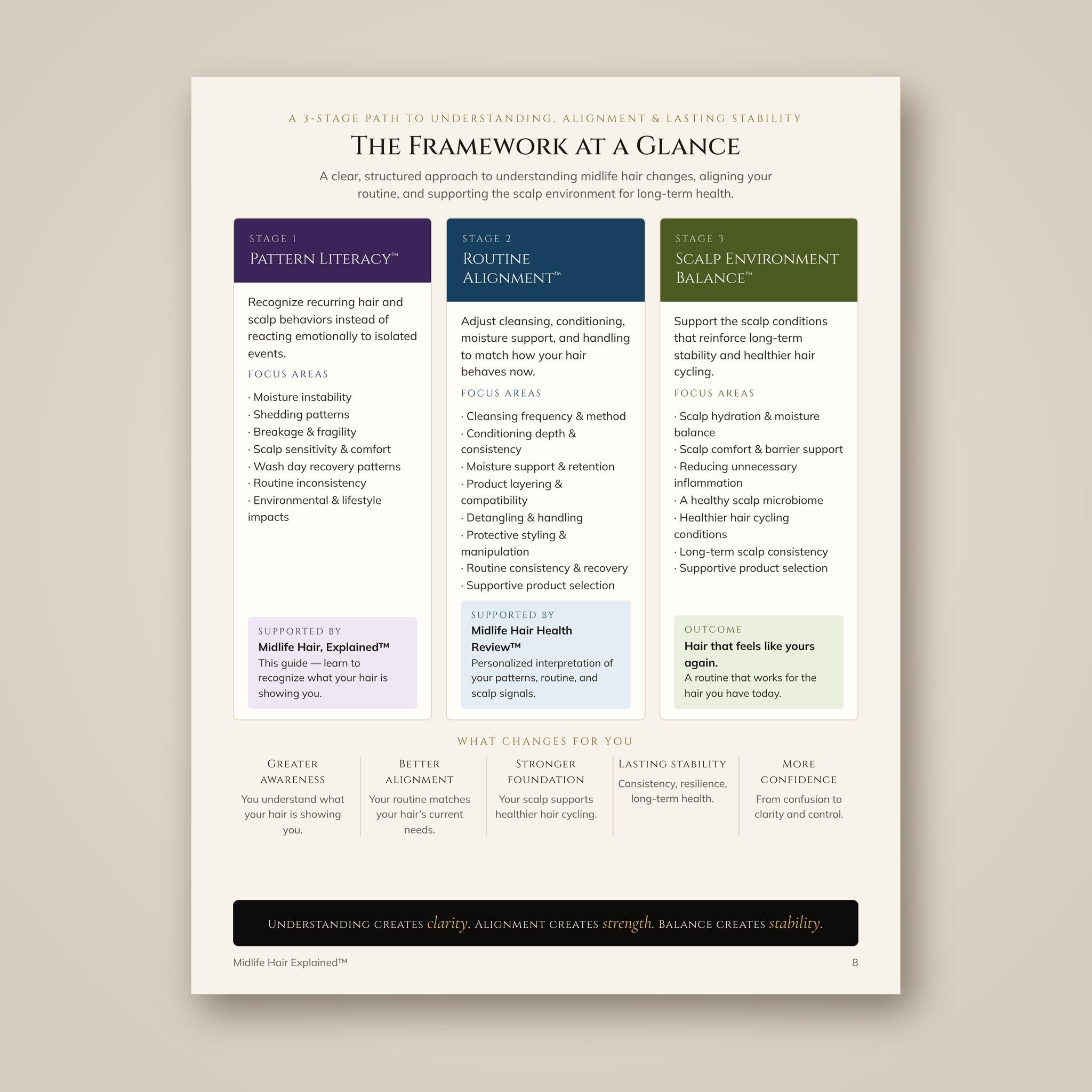
Midlife Hair, Explained™ walks you through all three stages of the Midlife Hair Stability Framework™ — a structured approach to understanding and supporting midlife hair behavior.
Stage 1 — Pattern Literacy™
Recognize recurring hair and scalp behaviors instead of reacting to isolated events.
Stage 2 — Routine Alignment™
Adjust routines so they better match how your hair behaves now.
Stage 3 — Scalp Environment Balance™
Support the conditions where hair growth cycling occurs.
Understanding begins with patterns.
Pattern Literacy™ helps you recognize:
-
what repeats
-
what fluctuates
-
what signals instability
-
what may simply be part of normal cycling
Instead of asking: “Why is this happening?”
You begin asking: “What pattern is this?”
That shift changes decisions.
And calmer decisions often create more stability over time.
A simple example of Pattern Literacy™
Many women assume increased shedding means their hair is “getting worse.”
Pattern Literacy™ asks a different question: "Is this shedding — or breakage?"
Shedding is part of the natural growth cycle. Breakage signals structural stress.
The difference changes what you adjust.
When the pattern is recognized correctly, you stop reacting emotionally and start responding intentionally.
That shift — from reaction to interpretation — is where stability begins.
Routine Alignment™ helps you adjust:
-
how often you cleanse
-
how you layer products
-
how you detangle and handle your hair
-
how consistently you follow your routine
So it matches how your hair behaves now — not how it behaved ten years ago.
Instead of asking: “What else should I add?”
You begin asking: “Does each step have a clear purpose?”
A simple example of Routine Alignment™
Many women respond to dryness by adding another product.
A leave-in. Then an oil. Then a cream.
Routine Alignment™ asks a different question: “Is moisture getting in — and staying in?”
Sometimes hair feels dry not because it needs more product, but because buildup is blocking moisture, or because it’s being applied to hair that isn’t freshly cleansed.
The answer may be fewer steps, not more.
Scalp Environment Balance™ helps you support the conditions where hair growth cycling occurs:
-
scalp comfort and sensitivity
-
buildup and cleansing
-
tension from styling
-
the hormonal, nutritional, and stress-related changes of midlife
Instead of looking only at the strands, you begin looking at where they grow.
A simple example of Scalp Environment Balance™
Many women notice thinning at the crown or edges and focus on the hair itself.
Scalp Environment Balance™ asks a different question: “What is the environment around the follicle responding to?”
Tension from styles, irritation from products, and hormonal shifts can all influence how hair grows and sheds.
Supporting the scalp is about creating conditions for stability over time, not chasing quick growth.
What you receive
-
A 44-page printed guide, color-coded by framework stage
-
The framework at a glance, on a single page
-
“You may notice” checklists to identify what sounds familiar
-
Pattern Reflection prompts throughout, with space to write
-
A printable reflection worksheet that gathers every prompt in one place
-
A printable shedding log with photo tracking, so you can see patterns over time
-
Clear explanations of midlife hair changes, in calm, plain language
This is a resource designed to be referenced and reused — not rushed through. Bring your worksheet and shedding log to your Midlife Hair Health Review™ or your dermatologist appointment.
What this Book is not
-
a styling course
-
a trend-based hair manual
-
a quick-fix formula
-
a panic-driven “hair loss solution”
Midlife Hair, Explained™ was created to help women understand recurring patterns so decisions feel clearer, calmer, and more intentional over time.
Where to begin
If you want to:
-
understand recurring patterns
-
reduce guesswork
-
recognize what your hair may be responding to
Start with: Midlife Hair, Explained™
Continue the process
Some women finish Midlife Hair, Explained™ with one realization: “I understand what may be happening now. I just want help applying it more intentionally.”
The Midlife Hair Health Review™ provides personalized interpretation grounded in the Midlife Hair Stability Framework™. Your completed worksheet and shedding log give us a clear starting point.
Together, we interpret:
-
your recurring patterns
-
your routines
-
your scalp signals
-
your areas of concern
So your next steps feel:
-
clearer
-
calmer
-
more structured
-
less overwhelming
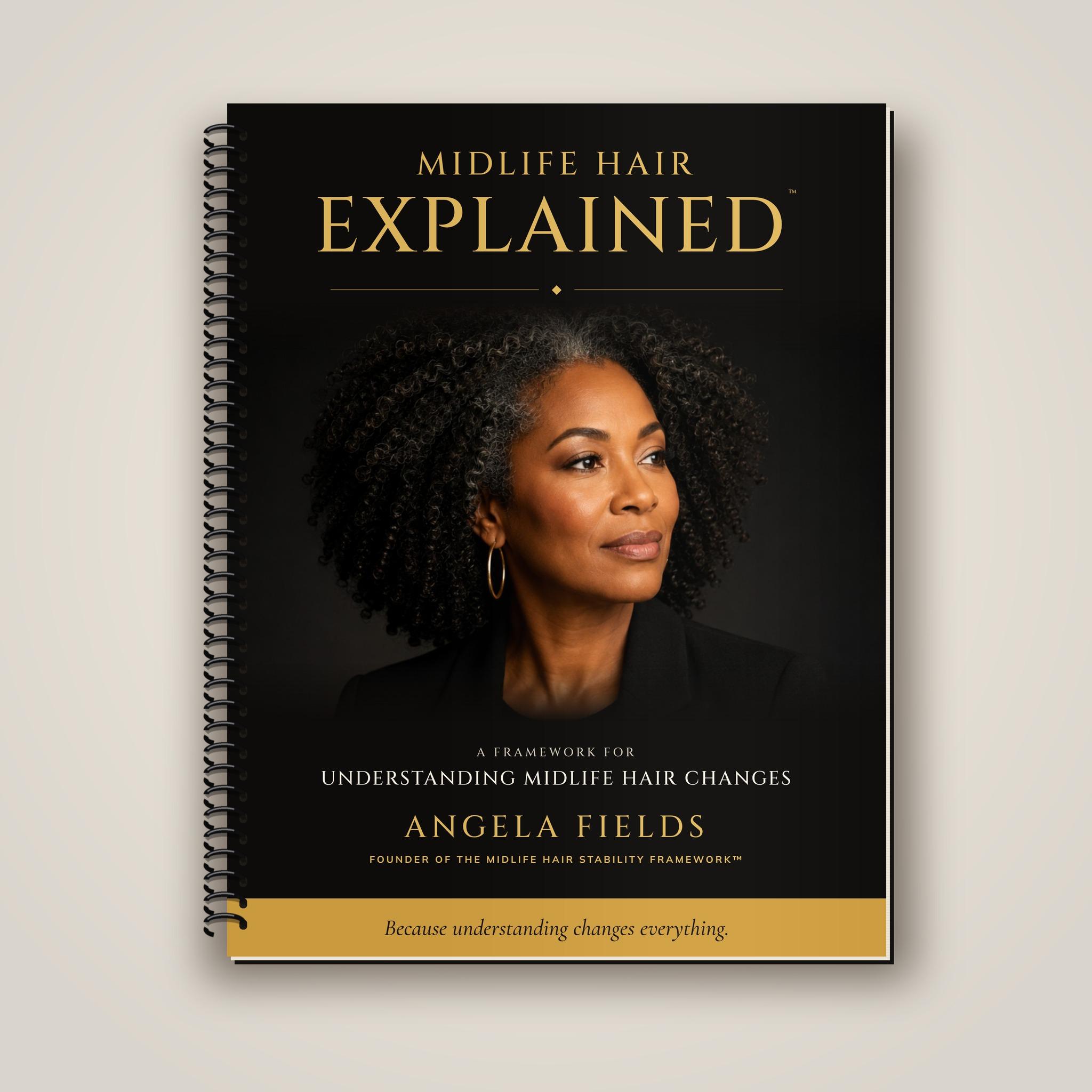

Angela Fields, Midlife Hair Health Specialist, Creator of Midlife Hair Stability Framework™
Angela Fields is a Midlife Hair Health Specialist, product formulator, and founder of CurlyCoilyTresses®.
After experiencing hair loss, scalp changes, CCCA (Central Centrifugal Cicatricial Alopecia), hormonal fluctuations, and the limitations of product-centered solutions herself, she developed the Midlife Hair Stability Framework™ to help women better understand what their hair may be responding to during midlife.
Her work focuses on:
-
pattern recognition
-
routine alignment
-
scalp support
-
moisture stability
-
reducing panic and guesswork through structured understanding
Your hair does not need perfection. It needs understanding.